Brazilian Jiu-Jitsu
for Kids in Kumamoto
10 Reasons to Have Your Child Learn Jiu-Jitsu
What You Should Know About the Most Advanced Martial Art
450
Members
Adult and child members
95
Kids
Kids enrolled
4–15
Ages
Kids' age range
5
Days a Week
Training days per week
For Parents
Don't miss
the most important years of your child's life.
If you are reading this, you are probably thinking about enrolling your child in some kind of activity. Maybe you are wondering, "Should I have my child learn a martial art?"
Or perhaps an acquaintance told you, "My child goes to a place called TATORU, and it's really good," and that's how you found this page.
Let me be direct. If you have heard that word of mouth and, after reading what follows, you think "This is the place!", please bring your child for a trial class.
TATORU is a dojo with many adults and children, so the number of new members we can accept is limited. Once we reach a certain number, we will close enrollment.
If your child trains both mind and body through Brazilian jiu-jitsu here in Kumamoto, every possibility for their future opens up. Of course, there are other wonderful activities besides TATORU.
But while you hesitate, your child's body keeps growing. Please don't miss the most important years of their life. Invest in your child's life.
One of the most important principles of jiu-jitsu is leverage. Apply leverage to your child's life and help them grow big. For that, your decision is needed.
A fresh wind is blowing through children's activities in Kumamoto. At the Brazilian jiu-jitsu (BJJ) dojo TATORU, 450 adult and child members gather day and night to enjoy this ground-based martial art on the mat.
With 450 members, TATORU has by far the largest membership of any dojo in Japan that teaches only jiu-jitsu. So what good things happen when a child learns jiu-jitsu? We have summarized the answer in 10 reasons.
10 Reasons
10 Reasons to Have Your Child Learn Jiu-Jitsu
01
Builds athletic ability
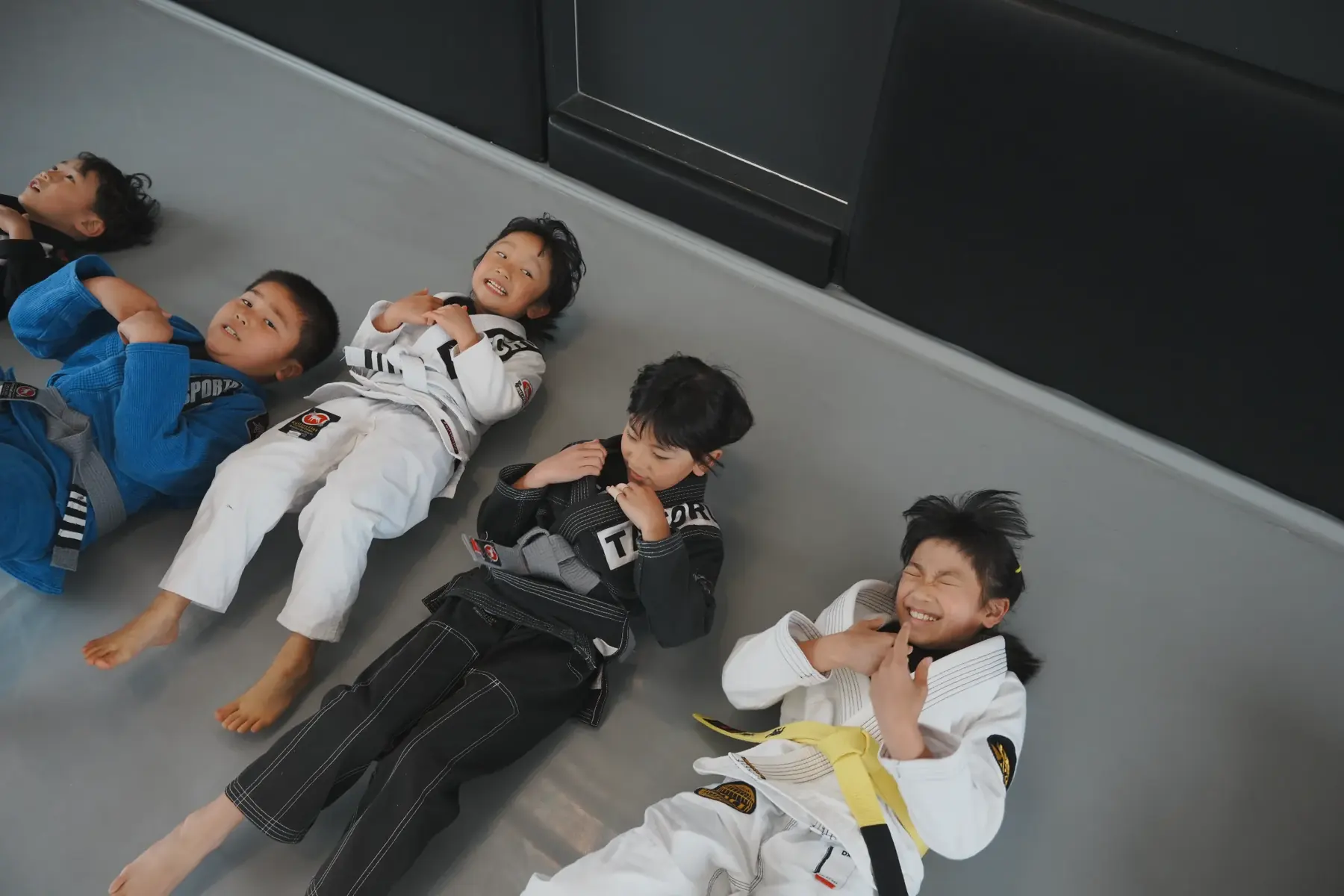
There is a time limit for developing athletic ability. It starts as early as ages 5 to 8 (the Pre-Golden Age). During this period, 90% of a person's motor skills are formed.
If children don't play outside during this time, or stay indoors playing video games, they grow into adults who are not athletic. These days, with fewer children, there are fewer kids to play with, and in cities, housing conditions have reduced the places to play. With more concrete and asphalt, there are fewer places to run around freely, so the environment is often not enough to develop a child's motor skills.
TATORU gives children a place to move freely during this precious period: the mat space. On a 5 cm thick mat, children can move with all their energy while easing the strain on their legs and back.
Of course, playing outside matters too. But developing athletic ability while doing jiu-jitsu on the mat is incredibly efficient. Even kids who already love playing outside improve their athletic ability further.
If your child develops motor skills at TATORU between ages 5 and 8, they build the foundation for learning every kind of body control during the Golden Age that begins at age 9. Body control learned in the Golden Age carries over into later sports and daily life, and they grow into someone who is good at moving for life.
By the way, do you assume "my child is clumsy"? That is a real problem. Children differ in athletic ability, but with proper coaching, they will definitely improve.
02
Makes them smarter
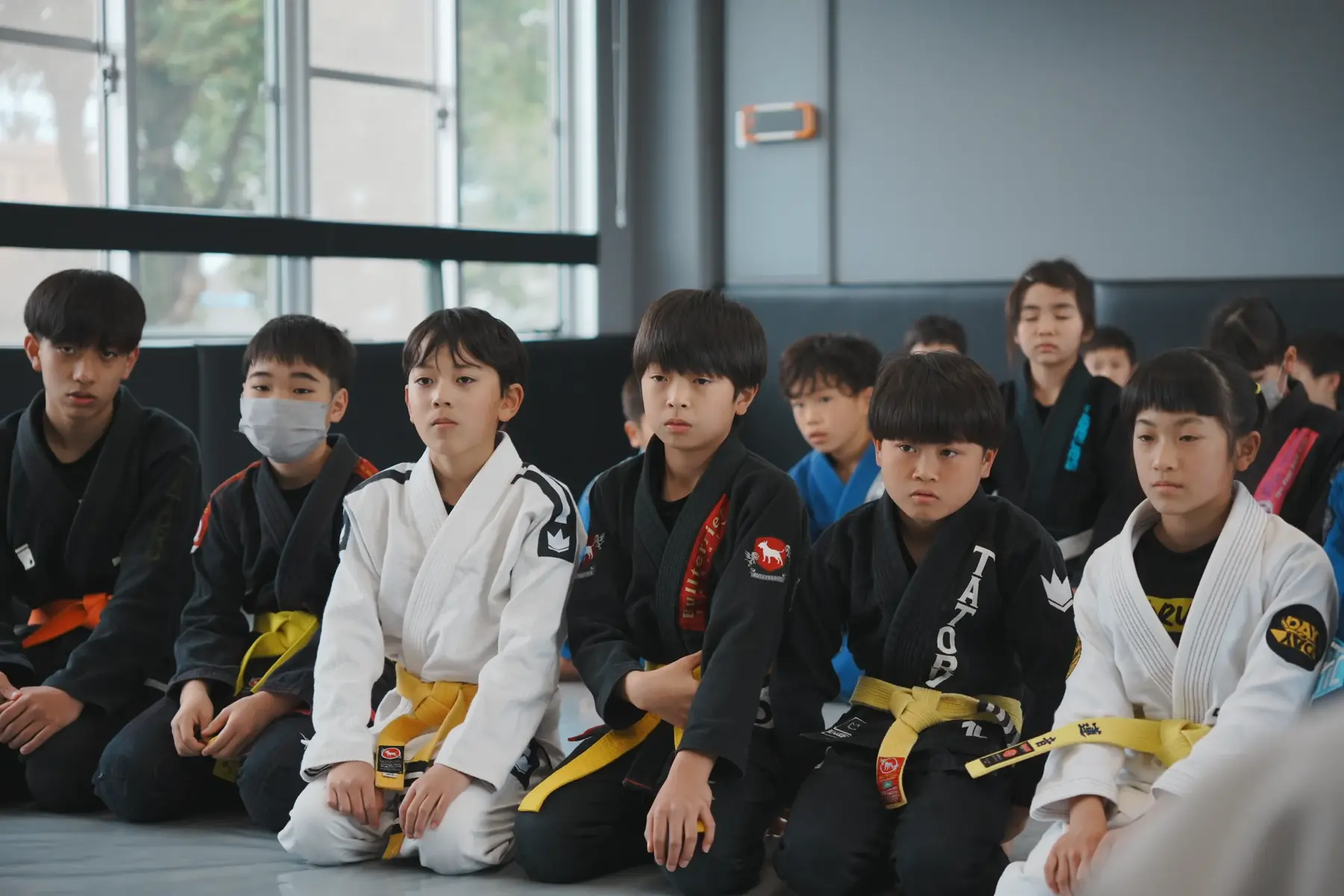
To build an exercise habit, it is important first to make your child someone who is not bad at sports. To do that, they develop motor skills in the Pre-Golden Age (ages 5 to 8), then learn body control in the Golden Age (ages 9 to 12), and discover the joy of "moving my body the way I want."
If that goes well, they become a person who doesn't find exercise a chore.
In fact, the brain is trained by exercise. Modern brain science has found that exercise produces BDNF (brain-derived neurotrophic factor), a kind of nutrient for the brain, which activates the brain, increases the number of brain cells, and creates new neurons. Put simply, exercise makes you smarter.
Building an exercise habit also raises school grades. In fact, many of the children at TATORU KIDZ are at the top of their classes at school.
TATORU KIDZ has Brazilian jiu-jitsu classes that children can join from age 4. Jiu-jitsu techniques have steps, and children learn them by watching, listening, and sometimes through quiz-style questions. Even young children focus on watching and listening and learn seriously.
What's more, jiu-jitsu techniques can only be done with a partner. The partner reacts too, so you need to understand the mechanics properly. Being able to use the techniques they have learned in sparring brings children great joy.
That forms a reward circuit, and they want to learn techniques even more seriously. In other words, through jiu-jitsu they learn the basic principle of "how to learn" itself.
03
Learn to greet people
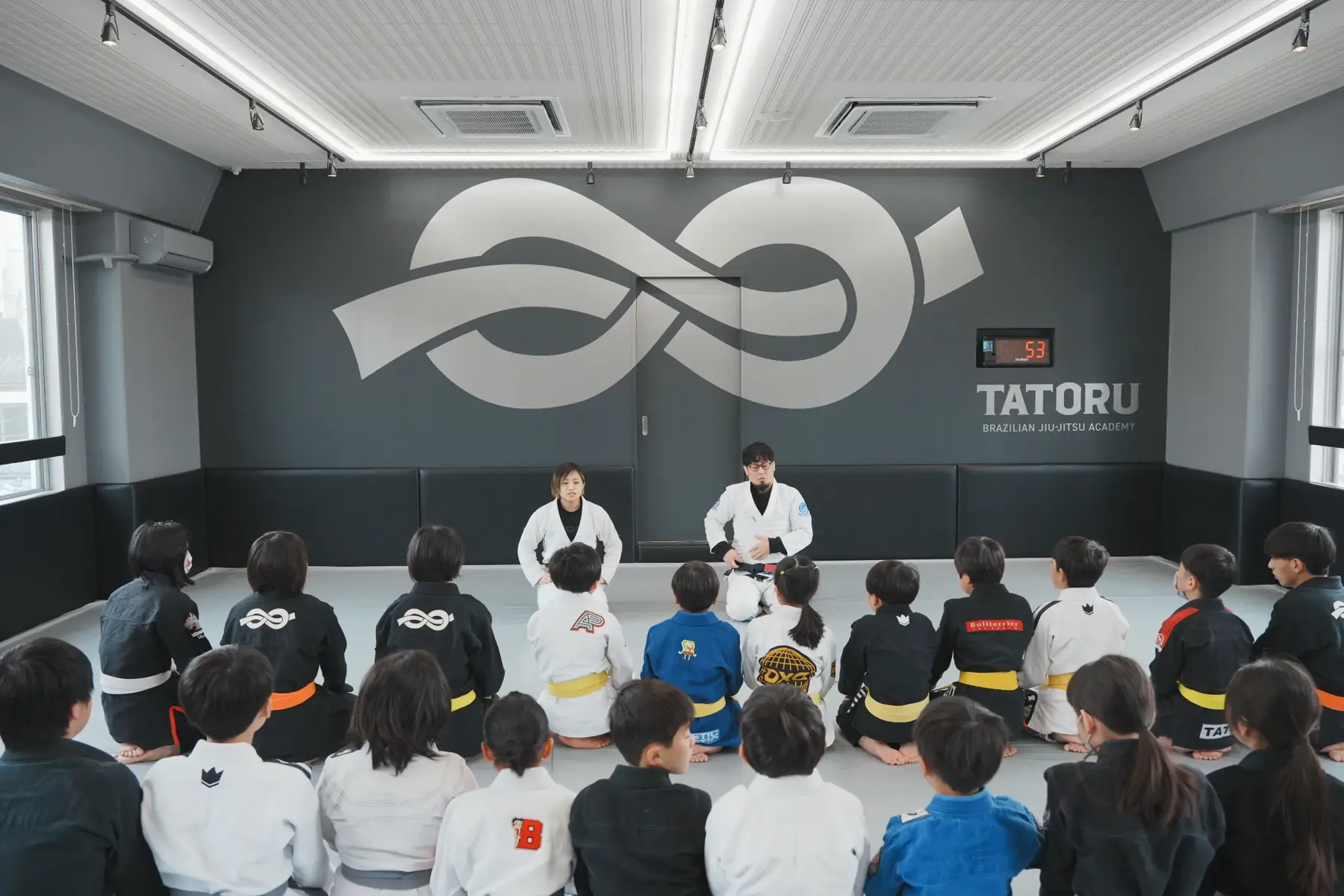
TATORU KIDZ is a jiu-jitsu dojo. A dojo is a special place that has existed in Japan since long ago, where people from children to adults gather to learn manners and greetings through martial arts.
After the war, martial arts were kept out of school education by the GHQ. It is said that Japanese people have no religion, but Buddhism and Confucianism are rooted in daily life as morals. They became etiquette and manners, and work as know-how for getting along smoothly in society.
Unfortunately, compulsory education does not properly teach this today. That is right: the place to learn it is the dojo.
Overseas, a church might be the closest equivalent. As a place that teaches greetings, the dojo is very important to society.
What TATORU KIDZ emphasizes most in raising children is greeting people. Nothing smooths human relationships like a greeting.
We don't teach stiff, formulaic greetings. We teach children to greet first when they meet someone, and to greet reflexively when they see a face. These days, even among adults, more people can't greet others.
When you can greet people, their guard comes down and things go smoothly. There is great value in teaching this from childhood. What surprises visiting parents first about the children at TATORU KIDZ is their greetings.
TATORU KIDZ puts special effort into greetings, because there is never a situation where being able to greet people costs you. It only benefits you.
04
Sharper sense of danger
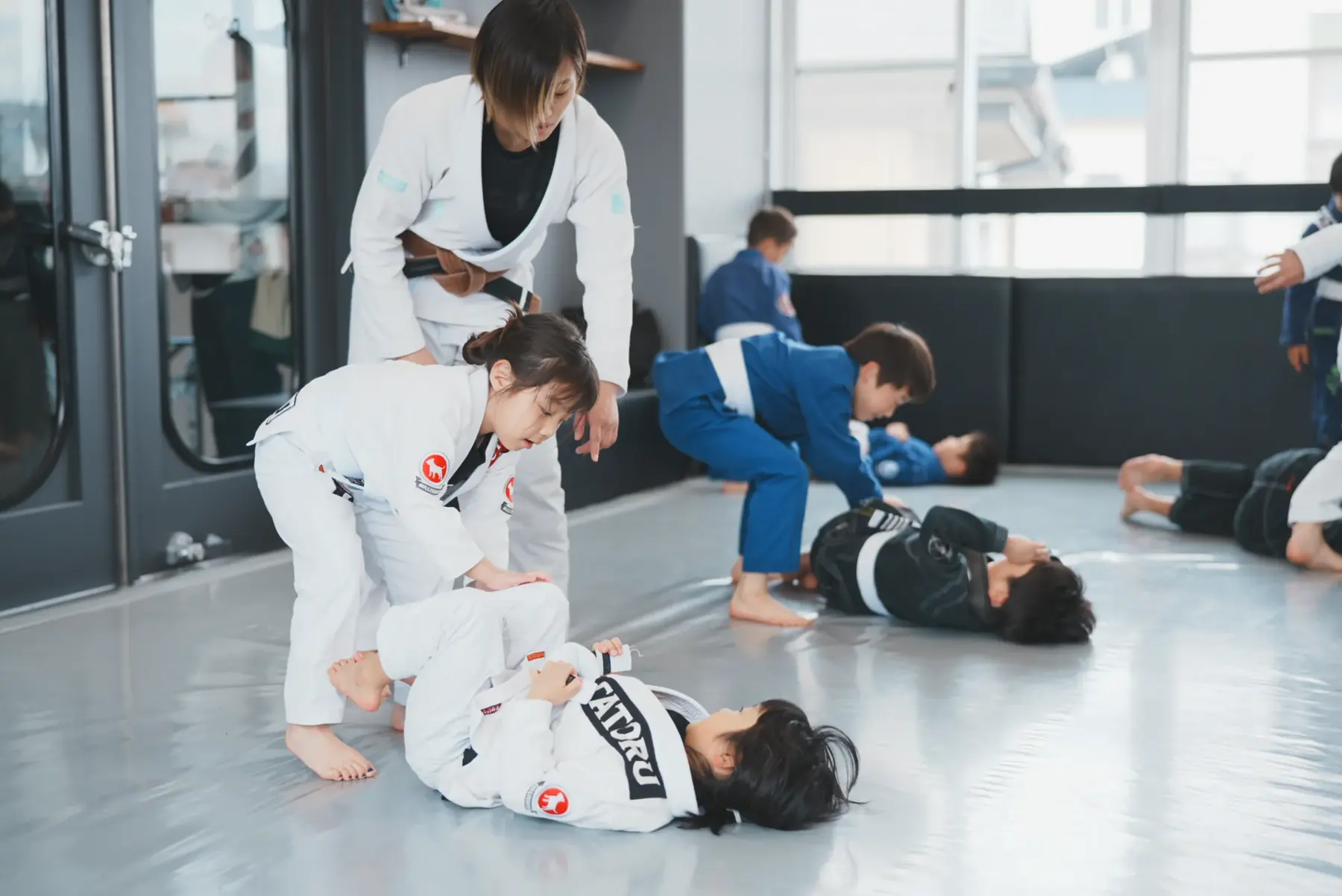
As long as people live, danger is always nearby. For parents who want to protect their children, safety is a big concern. Could my child be abducted? Could they be hit by a car? Could they suffer senseless violence? The worries never end.
So what is needed to raise a child's chances of survival? Improving their self-defense ability.
The self-defense ability built through jiu-jitsu doesn't simply mean getting stronger in a fight. By understanding physical laws with their bodies, children come to feel, for example, how much impact an object of a certain weight makes when it falls at a certain speed.
With this ability, children stop doing dangerous things like racing a bike at full speed down a slope where kids walk. They sense how dangerous it is. And the danger isn't only from violent people.
They also develop the sense to tell something is "suspicious" from a person's eyes, or to sense "that person is trying to trick me" from the tone of voice. These are wonderful instincts that martial arts cultivate.
05
Makes more friends
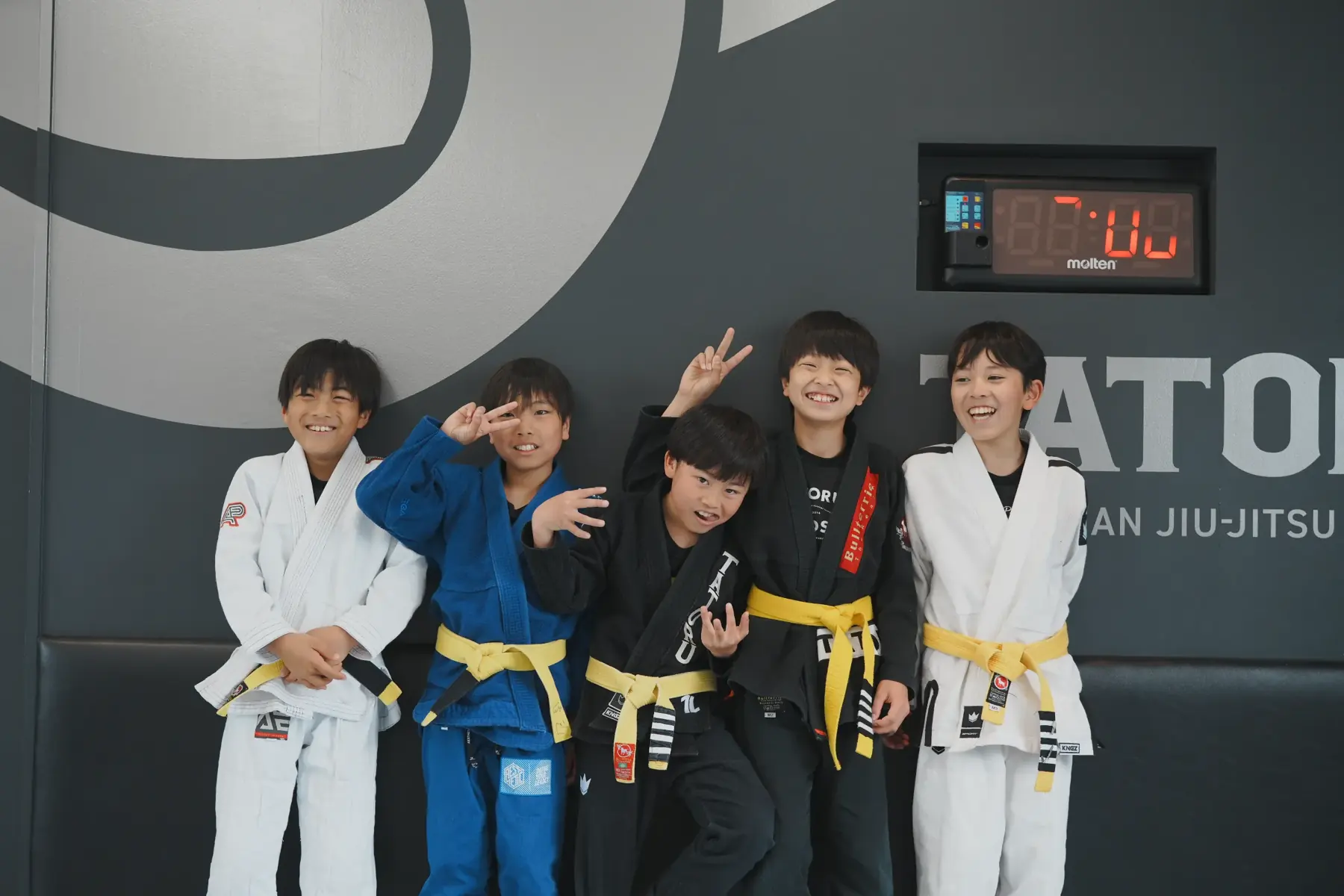
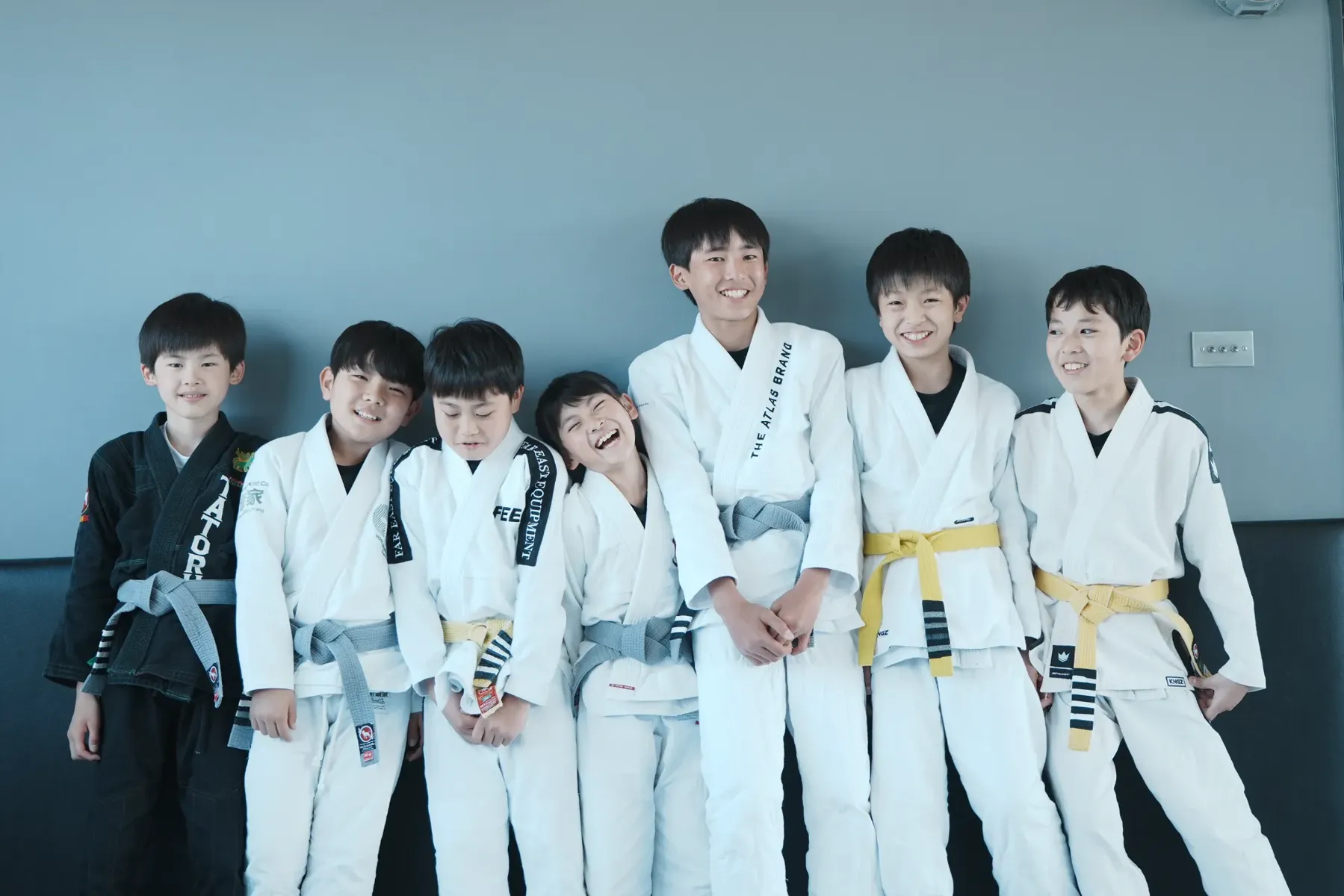
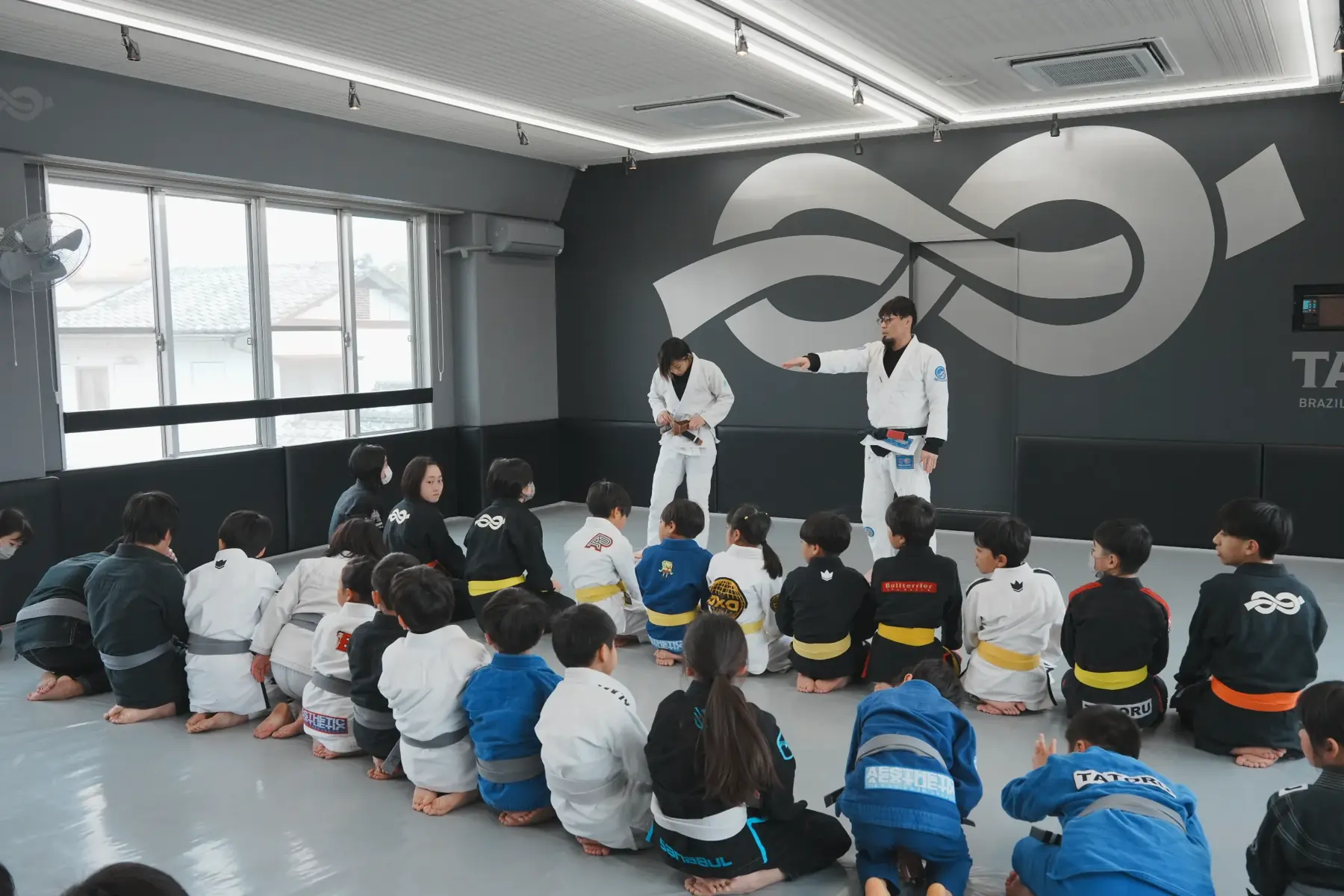
At TATORU KIDZ, children of various ages train together. Older kids look after younger ones, and kids who can do it help those who can't. We didn't tell them to do this. It happened naturally.
At TATORU, the adults help one another in the same way. It is that kind of community.
Many of our current child members joined after a parent became a member first and recommended it. Naturally, children watch their parents' behavior and imitate it.
When a visiting child is spotted by a senior member who says "This way!" and leads them up the stairs by the hand, the parent who brought them can relax. The dojo is a different world from school, so children make friends across grades.
The children at TATORU call each other by first name, even across wide age gaps. We didn't teach this either; it just became that way. I think the sense of solidarity among people pursuing the same martial art deepens their bond.
06
Stronger body
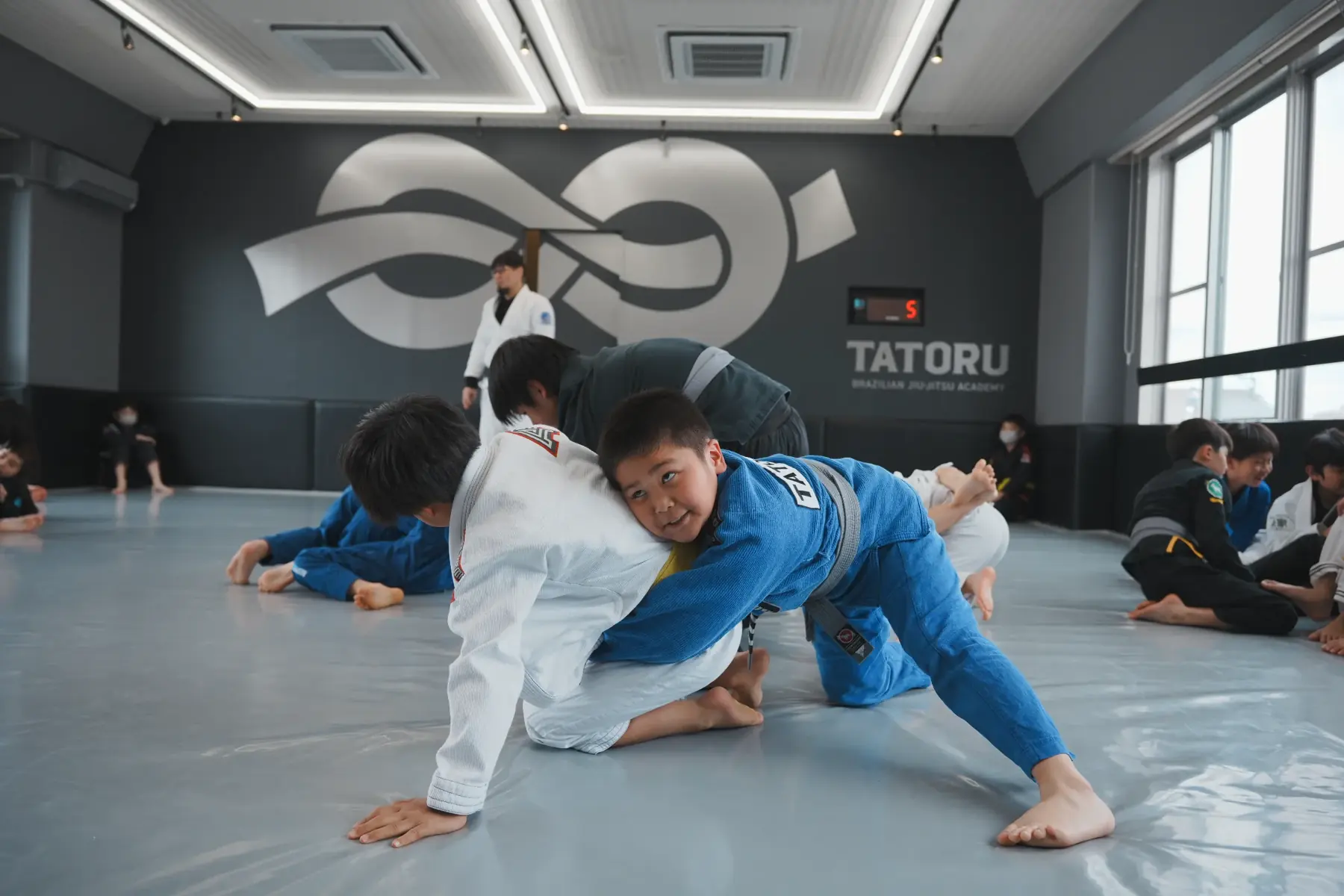
If you keep doing jiu-jitsu, you build stamina and muscle. Your cardiovascular fitness improves too. Jiu-jitsu is a martial art that trains the muscles of the whole body in balance.
Immunity also improves, and your child will be less likely to catch colds. Learning how to fall and how to move the body also makes injuries less likely. Even if they bump into something, they become tougher to pain. In short, they get a sturdy body.
Have you ever seen a child break a bone at a sports day just from a small fall? Children who don't usually exercise don't develop normal bones.
Training the body also boosts appetite and improves sleep. With the right nutrition and sleep, growth hormone is released, and the body grows even more.
Humans are a kind of animal. If the body isn't strong, the mind doesn't grow healthy either. That's true for children and adults alike. To get through today's stressful society, you need a strong body.
07
Brighter personality
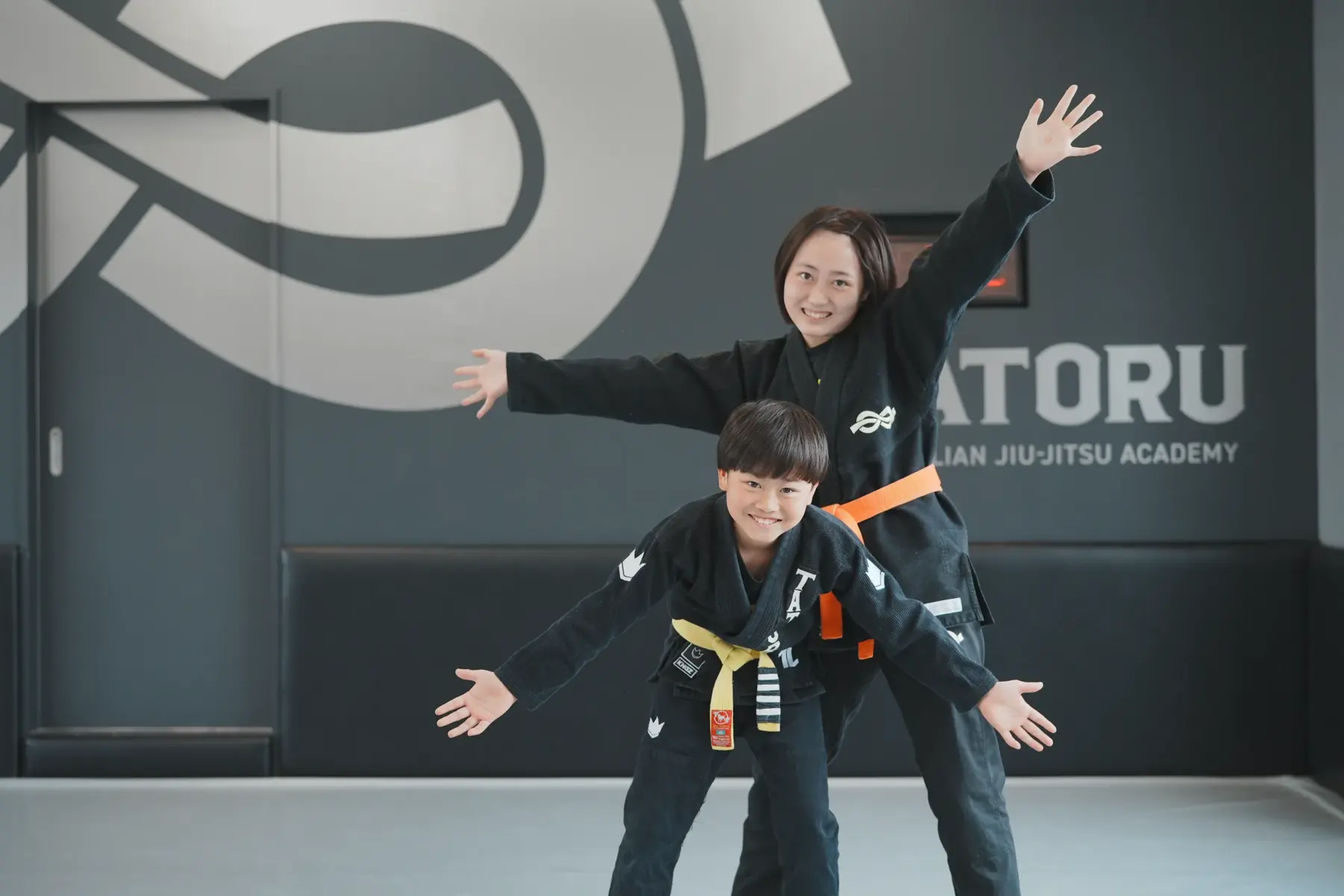
Exercise regulates the autonomic nervous system, steadies the mind, and brightens personality. Children stop dwelling on small things.
The autonomic nervous system controls bodily functions you can't control by will, such as breathing, body temperature, and metabolism. It has the sympathetic (activity) and parasympathetic (rest) branches. When they are out of balance, you can't rest when you want to or move when you want to, which is called autonomic dysfunction.
When exercise lets the autonomic nervous system switch smoothly ON and OFF, the mind steadies too. Children who are restless or have big mood swings may have autonomic dysfunction.
For both children and adults, building an exercise habit reliably improves personality.
08
Becomes calmer
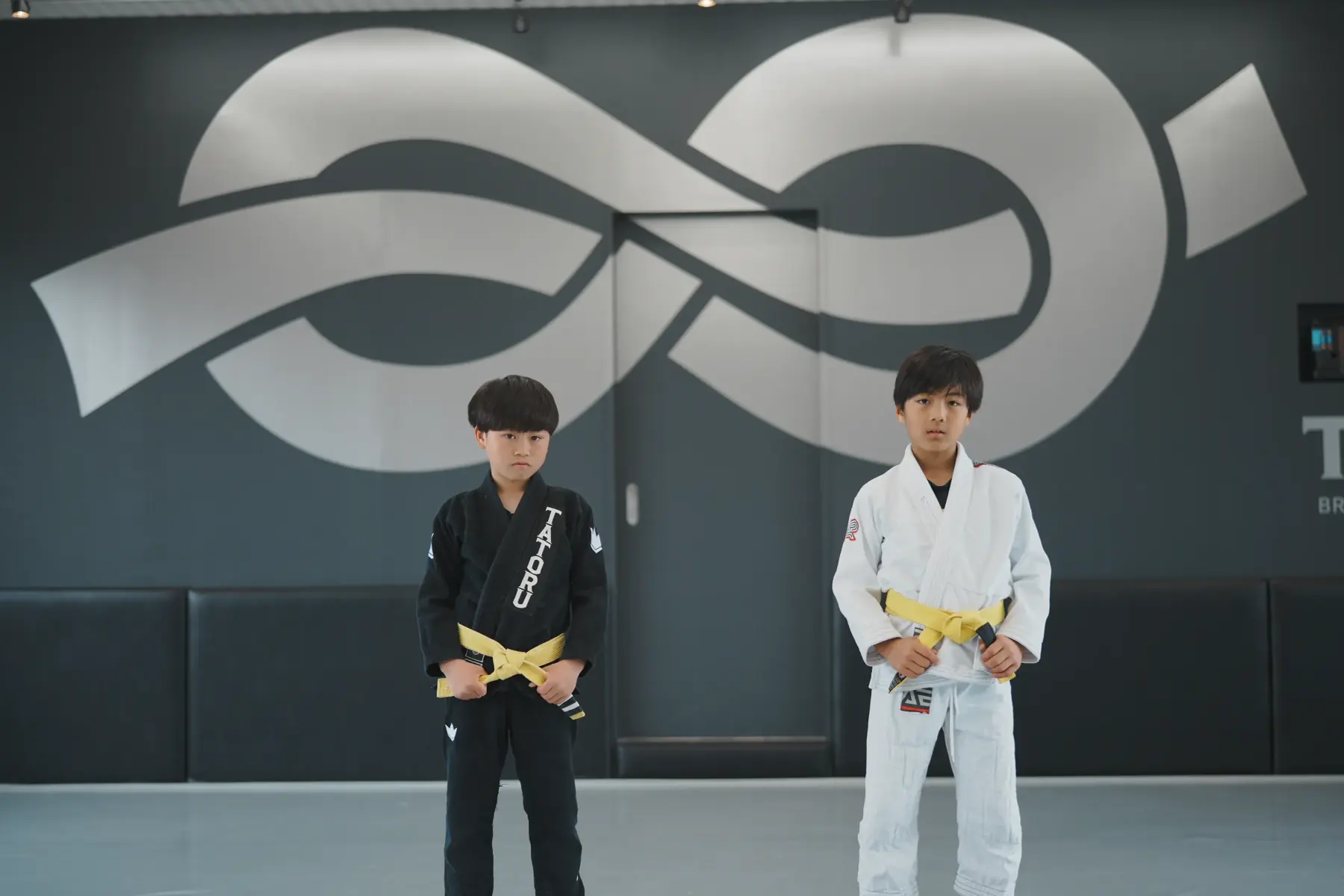
"My child seems more restless than other kids." Many parents feel this way.
Restlessness can come from personality, upbringing, lack of exercise, or poor nutrition. But even easily distracted children can listen to others after about two months at TATORU KIDZ.
The most common comment we hear is, "My child stopped fighting at school."
At TATORU KIDZ, if a child is restless and noisy, we stop the lesson and clearly tell them that the other children are being bothered. Even small children are told, "Don't be spoiled. Pull yourself together."
These days, school teachers have stopped scolding children. TATORU KIDZ covers that side thoroughly. We scold so firmly that first-time parents are surprised. Rest assured, though, we never lay a hand on them. We don't yell or get angry unreasonably. We simply scold.
This is another good thing about martial arts. Children learn to truly understand that the mat is a sacred place.
It may be surprising, but for children, an environment with some limits (rules) is more fun than a free-for-all where anything goes. In fact, 90% of the children at TATORU KIDZ come on their own, four times a week. Parents don't drag them there. The children say, "I can't wait to go!"
Children enjoy being part of the TATORU KIDZ community, and they feel safe in it.
09
Builds an exercise habit
More and more children don't exercise outside of school. Some parents just give them sweets, thinking "they are quiet as long as they have sweets." Children from families where the parents don't exercise rarely develop an exercise habit.
Before this TATORU KIDZ page was made, 70% of kids' parents were already doing jiu-jitsu at TATORU. Parents tried it themselves and thought, "This is great, I want my child to do it too." As those voices grew, demand for kids' classes rose, and we finally opened them officially.
The other 30% of children also joined through word of mouth from parents of children already attending.
Building an exercise habit from childhood is extremely important. TATORU KIDZ holds eight kids' classes per week. Most kids' members attend about four times a week on average, so that habit will likely continue into adulthood.
An exercise habit makes children smarter, improves their personality, and makes them calmer. It is all upside. By any measure, they grow into promising people.
You can buy your child's exercise habit for about 10,000 yen a month. That's the price of a Nin●endo Switch console and a few games. The benefits of an exercise habit come back hundreds of times over in the future.
Seen that way, it is a very smart investment.
10
Connects parent and child
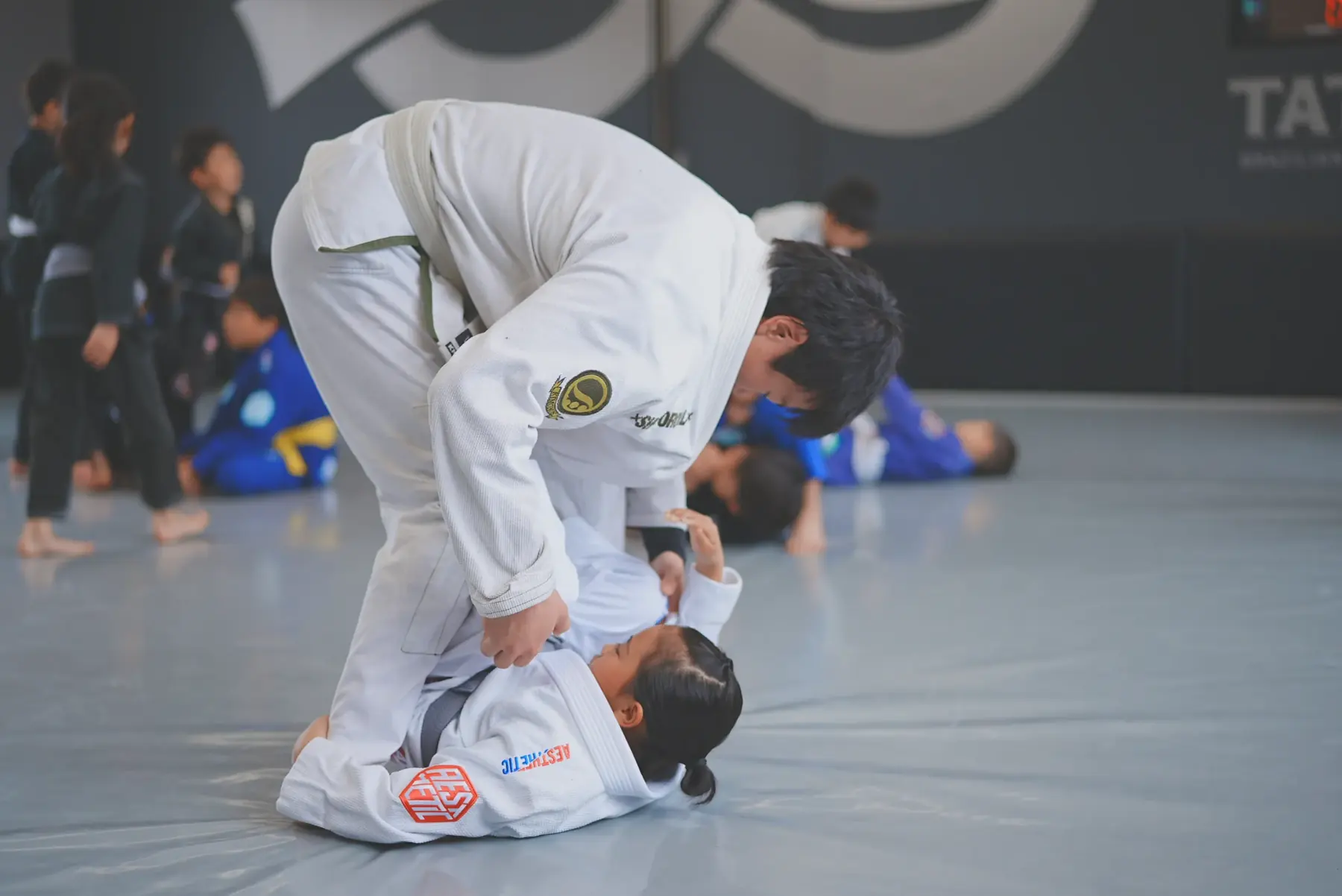
"Lately, we talk less as parent and child," or "I don't want that to happen as they grow up." If you feel this way, please learn jiu-jitsu too.
TATORU KIDZ has classes twice a week that parents and children can take together, and they are very popular. You get regular physical contact as parent and child, and research techniques together at home. Sharing a hobby keeps you close for years.
We also hold recreation events often: hiking, bowling tournaments, Halloween costume parties, and more. Events like these deepen the bond between parent and child.
For children who compete, parent and child prepare for matches together, travel to tournaments, and share the ups and downs.
A Message from
the Director
For those considering joining
Thank you for your interest in TATORU KIDZ. I am Takagame, head of TATORU.
TATORU currently has 95 children aged 4 to 15 enrolled. For around age 4, only 2 spots remain, and across all ages the enrollment limit is 5 more. Once we reach capacity, further applicants will be placed on a waiting list.
Some families who were thinking of joining have found it was "too full to get in." Please decide quickly.
Yosuke Takagame, Head of TATORU
Movie
Everything on this website is summarized in this video.
About
What kind of dojo is it?
Where, who, what, and how we teach. Prices and frequently asked questions are included too.
Read MoreReviews
What people say about this dojo
Read what parents who attend say in Google reviews.
Google ReviewsDaily training
You can see just what jiu-jitsu looks like.
@tatorubjj